All published articles of this journal are available on ScienceDirect.

Advanced Microbial Bioremediation Techniques for Heavy Metal Detoxification and Environmental Restoration
 iD
Amin Mohsenzadeh2
iD
Kasra Kamali3
iD
Salman Ahmady-Asbchin4
iD
Amin Mohsenzadeh2
iD
Kasra Kamali3
iD
Salman Ahmady-Asbchin4
Authors Info & Affiliations
Abstract
Heavy metals contaminate ecosystems, posing significant risks to human and animal health in the modern environment. Understanding heavy metal accumulation sources is essential to reducing their negative consequences. This article navigates through the complexities of heavy metal pollution, shedding light on its sources and mechanisms of dispersion. Heavy metals from industrial, agricultural, and urban activities build up in soil, water, and air. They remain continuously bioaccumulated in living species, causing toxicity and ecological imbalance. Heavy metals can cause an increase in antibiotic-resistant microorganisms, which, in turn, leads to an increase in antimicrobial resistance. Despite these severe hurdles, biosorption approaches offer a potential solution.
The work further highlights the potential of biosorption as a sustainable remediation strategy, utilizing bacteria, fungi, and algae to effectively remove heavy metals from contaminated environments. Bacteria play a crucial role in biosorption because they biosorb heavy metals through multiple mechanisms, including cell-wall binding of metal ions, Extracellular Polymeric Substance (EPS) complexation, and metal sequestration within structured biofilm matrices, each contributing to efficient metal removal from contaminated environments. Additionally, the study further explores the use of microbial bioremediation through genetic engineering, which offers the potential to enhance metal-binding capacity and environmental tolerance in microorganisms.
The article concludes with an urgent call for integrated, biotechnology-driven strategies to mitigate heavy metal pollution, emphasizing that judicious use of both natural and engineered microbial systems can restore ecological stability, reduce public health hazards, and contribute to the long-term management and protection of the environment. By exploring the complex interactions between heavy metals and microbial communities and applying advanced bioremediation technologies, we can move toward restoring ecological balance and ensuring a healthier future for generations to come.
1. INTRODUCTION
1.1. Heavy Metals
Heavy metals are elements that occur naturally but have turned into major environmental contaminants due to human activities such as mining, metal processing, and waste disposal. Furthermore, these metals, such as lead, mercury, cadmium, nickel, copper, zinc, and arsenic, vary in their toxicity levels. However, some are highly toxic, such as cadmium, mercury, and arsenic, while others are moderately toxic, such as lead, nickel, copper, and zinc [1]. The term “heavy metal” is used to describe metals and metalloids that have an atomic density greater than 4 grams per cubic centimeter, which is 5 times the density of water [2]. Because heavy metals are discharged into the environment through human activities, they often build up in soil, water, and air.
As a consequence, these heavy metals can present a significant threat to human health. Additionally, these metals may cause harmful impacts on human well-being. [1, 2]. Precious metals and toxic heavy metals, unlike organic pollutants, are non-degradable and continuously accumulate in the food chain, and are considered detrimental to the environment. Due to their inability to break down over time, heavy metals can accumulate and have long-term consequences for the ecosystem as well [3]. Since some heavy metals are vital for various biological activities; as a result, their safe levels must be carefully monitored and regulated to avoid potential harm. Therefore, it is critical to control the levels of heavy metals to ensure that they are within safe limits for human consumption and biological processes [3]. Therefore, heavy metals have emerged as a primary contributor to environmental pollution and degradation, leading to potential health risks to humans and wildlife.
1.2. Origins and Harmful Impacts of Heavy Metals on Humans and the Ecosystem
Heavy metals are known to be cytotoxic, even at low concentrations, and can cause cancer in humans. Toxic metals can bioaccumulate in the body through contaminated food sources, which can pose significant health risks to living organisms. As these metals move through the food chain, their concentrations increase, leading to potentially harmful levels in certain species [4]. Furthermore, the toxicity of heavy metals to mammals results from their chemical interaction with cellular proteins, enzyme systems, and membranes. Heavy metal toxicity can affect specific organs in the body that accumulate these metals, and this effect can be influenced by the metal’s chemical properties and exposure conditions. It is important to note that these toxins are primarily of human origin, resulting from anthropogenic activities such as industrial processes and waste disposal [5]. The fundamental mechanisms of metal toxicity are typically linked to the affinity of metal ions to cellular components and biomolecules, as well as the durability of the complexes formed between metals and biomolecules. These complexes between metals and biomolecules can produce toxic effects through multiple mechanisms, including blocking functional groups on biological molecules, replacing vital metals in enzymes, or attaching to the cellular thiol pool. In addition, metals can participate in chemical reactions in cells that may be harmful. As a result, the harmful effects of metal toxicity can include damage to proteins, DNA, and biological membranes, interfering with the function of enzymes and cellular processes, and causing oxidative stress [6]. Hence, the toxic effects of heavy metals in animals and humans are more pronounced when nutritional levels are elevated, as higher intake of essential nutrients can inadvertently increase their absorption and bioavailability through competition, enhanced transport, and metabolic interactions. This can amplify oxidative stress, disrupt cellular homeostasis, and lead to greater accumulation of metals in critical tissues. For this reason, it is necessary to monitor and regulate the levels of these metals in the environment. Table 1 lists the sources and toxic of specific metal ions [7].
| Metal | Source | Toxic Effect | References |
|---|---|---|---|
| Lead | Mining Paint Pigments Electroplating manufacturing of batteries Burning of coal |
Anemia Brain damage Anorexia Malaise Loss of appetite Damage: Liver Kidney Gastrointestinal and mental retardation in children |
[8, 9] |
| Cadmium | Plastic Welding Pesticide fertilizer Mining Refining |
bone degeneration [itai–itai syndrome], kidney and liver damage, disturbance in the cardiovascular system, and emphysema | [10, 11] |
| Copper | Electroplating Metal cleaning plating baths Mining Fertilizers Pulp and paper Petroleum industries |
Stomach intestinal distress Kidney damage Anemia |
[12, 13] |
| Nickel | Non-ferrous metal Mineral processing Paint formulation Electroplating Porcelain enameling |
Renal edema Lung cancer Pulmonary fibrosis Skin dermatitis Gastrointestinal discomfort |
[14, 15] |
| Mercury | Combustion of coal Fossil fuel Ben-Ali petroleum The operation of mercurial Fungicides in farming Paper industry Catalysts used in industries Chlor-Alkali plants Gold mining |
Damage to the nervous system Protoplasm poisoning Corrosive to: Skin Eyes Muscles Dermatitis Kidney damage |
[16] |
| Zinc | Mining, refineries Brass manufacturing Plumping |
Metal-fume fever Damage: Liver Kidney Pancreas |
[8, 17] |
| Arsenic | Smelters Mining Power station industries Insecticides Herbicides Fungicides Wood preservatives |
Carcinogenesis Neurological diseases Skin diseases: Arsenicosis Hyperkeratosis Pigmentation changes |
[18, 19] |
1.3. Impact of Heavy Metals on the Antibiotic-resistant Bacteria and Gene Transformation
Antibiotics are a class of compounds that can be natural, synthetic, or semi-synthetic and are known for their antimicrobial properties. These compounds combat bacterial infections effectively across a wide range of pathogens [20, 21]. Antibiotics are widely regarded as one of the most successful classes of drugs in human history. They play an essential part in the fight against microbial infections and have saved countless lives over the years. Their discovery and development have been a boon to human civilization and have provided a powerful tool in the fight against bacterial diseases [22]. The challenge of antibiotic resistance is recognized as one of the most important concerns of global health today. Despite this, pharmaceutical industry investments in antibiotic development are declining. This is a major obstacle in the ongoing fight against bacterial infections, as the development of new antibiotics is critical in maintaining effective treatment options for patients [23]. Antibiotics that accumulate in the environment as a result of industrial waste, mineral waste, sewage pollution, agriculture, and aquaculture can create selective pressure on bacteria. This pressure can lead to the survival of bacteria that encode resistance genes and create a focus for the spread of resistance. As a result, the accumulation of antibiotics in the environment is an important factor in the global problem of antibiotic resistance [24].
In environments where both antibiotics and heavy metals are present, microbes can be exposed to both types of pollutants. This co-exposure can lead to selection and co-selection of bacteria towards antibiotic resistance [25]. In natural ecosystems, it has been shown that simultaneous contamination with heavy metals and antibiotics causes the spread of antibiotic resistance, which sometimes leads to multi-antibiotic resistance in resident microbiota. Therefore, the simultaneous presence of heavy metals and antibiotics in the environment plays an important role in the growing problem of antibiotic resistance [26]. Studies show that the combination of antibiotic and metal resistance in bacteria may not be random, and the resistance of bacteria to heavy metals is directly related to the presence of these elements as environmental pollutants. In other words, exposure to heavy metals in the environment can lead to the development of resistance mechanisms in bacteria that can give resistance to metals and antibiotics. This is a matter of concern because the spread of antibiotic resistance can have serious consequences for human health and the environment [27]. In summary, Table 2 demonstrates that heavy metal pollutants can enhance bacterial resistance to antibiotics through co-regulation of resistance [28].
| Metals Tested for Resistance | Organisms | Location | Antibiotic Resistance | References |
|---|---|---|---|---|
| As, Cd, Hg, Pb | Nile tilapia: Oreochromis niloticus Butterhead variety lettuce: Lactuca sativa |
water sources | ampicillin and tetracycline | [28] |
| Zn, Fe, Co, Cr, Cd | Enterococcus faecalis, Enterococcus gallinarum, and Enterococcus solitarius | The waste of Black Sea and the Marmara Sea |
Multiple | [27] |
| Co, Ni, Pb, Cu, and Zn |
Aeromonas spp. Azotobacter spp. Enterobacter spp. Escherichia coli Proteus spp. Providencia spp. Pseudomonas spp. Serratia spp. Shigella spp. |
The agricultural soil | Amoxicillin [AMX] Ampicillin [AM] Tetracycline [TE] |
[34] |
| Hg, Cd, Zn | Marine bacteria [Gram-negative [mostly pigmented] | Coastal water, Antarctic Sea | Multiple | [35] |
| As, Cd, Co, Cu, Hg, Ni, Pb, Zn | Marine bacteria [heterotrophic aerobic community] |
Coastal water, Alessandria [Egypt] | Ampicillin [Co,Ni] BACITRACIN [Hg] Erythromycin [Cd] Gentamycin [As] Penicillin [Cu] |
[35] |
| Cd, Cr, Hg, Zn | Marine bacteria: Flavobacterium, Aeromonas, and Pseudomonas |
Coastal water, Alessandria | Ampicillin [Ni] Penicillin [Cu] Multiple [Pb] |
[36] |
| Cd, Cr, Co, Fe, Zn Marine | Marine bacteria: Enterobacteriaceae |
Brackish water lagoon, Istanbul [Turkey] | Multiple | [37] |
| V | Marine bacteria: [Photobacterium, Escherichia coli] |
Pacific marine, sediments [Japan] | Oxy-tetracycline | [38] |
| Cd, Cu | Cd, Cu Marine bacteria [Enterococcus faecium, Enterococcus casseliflavus, Enterococcus hirae, Enterococcus gallinarum, Enterococcus faecalis, Enterococcus durans, Enterococcus spp.] |
Adriatic Sea [Italy] | Erythromycin [Cd] | [39] |
| Cu, Pb, Zn | Freshwater bacteria [Pseudomonas, Acinetobacter, Enterobacter, Moraxella] |
Drinking water, Oregon [USA] | Multiple | [35] |
| Cd, Ni | Freshwater bacteria [bacterioplankton] | Wisconsin [USA] | Ampicillin Tetracycline |
[40] |
| As, Cd, Cr, Cu, Hg, Pb | Freshwater bacteria [Gram positive, Gram negative] |
Delhi [India] | Multiple Vancomycin Teicoplanin | [41] |
| Cd, Cr, Cu, Hg |
Macrobrachium rosenbergii, Aeromonas, Escherichia coli, Edwardsiella, Salmonella, Vibrio] |
Marine hatchery [Malaysia] | Multiple | [42] |
| Cd, Cr, Cu | Bacteria isolated from Rana catesbeiana [Edwardsiella, Aeromonas, Flavobacterium, Vibrio] |
Aquaculture [Malaysia] |
Multiple | [42] |
| Cr, Cu, Mn, Zn | Aquatic amphibians and reptilians [Aeromonas, Vibrio, Enterobacter, Klebsiella, Pseudomonas] |
Turkey | Multiple | [43] |
| Cd, Hg, Zn | Antarctic bacteria isolated from Hemigellius pilosus [Arthrobacter, Psychrobacter] |
Antarctic | Multiple | [44] |
| Al, Br, Cd, Co, Cu, Fe, S, Zn |
[Aeromonas, Enterobacter, Pseudomonas, Salmonella] |
Oman Gulf, Arabian Sea | Multiple [Zn] | [45] |
| Hg, Zn | Bacteria isolated from Sterechinus neumayeri [Flavobacterium, Psychrobacter] |
Antarctic | Multiple | [46] |
| Cd, Cu, Pb | Vibrio parahaemolyticus from Shellfish | Shanghai, China | Rifampicin Streptomycin |
[47] |
| Ba, Co, Cr, Cu, Cd, Fe, Sr, Zn | Shewanella putrefaciens from Shellfish | West Sea, Korea | Multiple | [48] |
Two mechanisms responsible for the co-selection of metal-based antibiotic resistance in bacteria have been identified: co-resistance and cross-resistance [29]. In a co-resistance mechanism, bacteria harbor two or more genes that confer resistance to a mobile genetic element, such as a plasmid, integron, or transposon. These genes enable bacteria to simultaneously resist different toxic compounds [30]. Bacterial resistance to antibiotics can occur through two mechanisms: Horizontal Gene Transfer (HGT), such as conjugation, transformation, and transduction, or mutations. Horizontal gene transfer involves the exchange of genetic material between bacteria, allowing the transfer of antibiotic resistance genes. Mutations can occur in genes that encode antibiotic targets, reducing the efficacy of the antibiotic [31]. Prokaryotic organisms have three main mechanisms for DNA transfer: transformation, transduction, and conjugation [32]. Horizontal gene transfer can lead to the acquisition of several antibiotic resistance genes in bacterial pathogens. In some cases, plasmids carrying heavy metal resistance genes and antibiotic resistance genes may also be transferred between bacteria, leading to the selection and spread of multidrug resistance, heavy metal resistance, and potentially dangerous properties through a horizontal gene transfer event [33]. Bacteria can acquire resistance to antibiotics through various mechanisms, including mutations in genes that encode antibiotic targets, activation of efflux pumps, and reduction in cell membrane permeability to antibiotics [26].
2. THE BIOSORPTION PROCESS
Biosorption is a physicochemical phenomenon in which biological materials remove dissolved or suspended chemical species from a solution. Previously, biosorption referred to the removal of metals by microorganisms [49]. Nevertheless, there is a differentiation in the absorption of metals between dead and alive bacteria. The term bioaccumulation now refers to the utilization of living cells, while the term biosorption refers to the utilization of dead biomass [50]. Certain bacteria possess the capability to eliminate heavy metals and other contaminants from the environment. Microorganisms can serve as a cost-effective and effective form of bioremediation [51]. Research on the biosorption process of heavy metals shows that the functional groups on the cell wall bind metal ions.
The three fundamental processes utilized in biosorption are physical capture, ion exchange, and functional group complexation. These processes can be employed individually or in conjunction with one another [52]. Microorganisms often have negatively charged cell surfaces due to functional groups such as carboxylic, hydroxyl, amines, or phenolic groups. This characteristic enables microorganisms to effectively bind to diverse cationic metal species [53].
3. RECOVERY OF HEAVY METALS THROUGH BIOSORBENTS
Microorganisms can be used for environmental remediation to restore polluted environments and achieve long-term environmental benefits in a sustainable and cost-effective manner [54]. Microbial remediation has proven to be a superior alternative to conventional methods by utilizing diverse microorganisms, including bacteria, fungi, and algae. These organisms not only remove heavy metals from contaminated environments but also transform them into less toxic forms, thereby facilitating the restoration process [55].
In recent decades, biosorbents have shown significant potential for removing and recovering heavy metals from industrial effluents, particularly those generated by metallurgical industries and electroplating processes [56]. Recent studies have also highlighted the enhanced biosorption capabilities of modified or engineered microorganisms, which effectively sequester heavy metals and radionuclides. These microorganisms thrive under harsh conditions while simultaneously absorbing heavy metals, radionuclides, and other pollutants from waste effluents [57, 58].
Adsorption is a process in which ions and molecules adhere to the surface of another substance. The accumulated material is referred to as the adsorbate, while the surface it binds to is called the adsorbent. When adsorption results in the formation of a stable molecular layer at the interface, it can lead to the creation of surface complexes. Many solids, including microorganisms, have functional groups such as –SH, –OH, and –COOH on their surfaces, which play a crucial role in facilitating metal adsorption [54]. By leveraging these properties, microorganisms can serve as efficient biosorbents, offering a sustainable solution for environmental decontamination.
3.1. Bacteria as Biosorbents
Microorganisms, plants, and other biological systems play a significant role in metal detoxification by utilizing various strategies such as biosorption. Microorganisms such as bacteria, fungi, and algae adsorb metal ions onto their cell surfaces using functional groups. Among various microorganisms, bacteria have been proven to possess exceptional biosorption capabilities, making them highly efficient in the detoxification of metals. Bacteria have evolved diverse and efficient mechanisms for detoxifying metal ions. Their primary objective in developing resistance mechanisms is to ensure their survival in a contaminated environment [52]. Gram-negative bacteria possess anionic functional groups as a result of the presence of peptidoglycan, phospholipids, and lipopolysaccharides in their cell wall. On the other hand, gram-positive bacteria contain peptidoglycan, teichoic acids, and teichuronic acids [59, 60]. Complexation refers to the process of combining two or more species, specifically metal ions and the functional groups found on the surface of bacterial cells. There are two distinct categories: monodentate and polydentate complexes. Monodentate complexes involve the binding of the metal ion to the ligands through covalent bonding. The ligand assumes a central position; however, in polydentate complexes, many metal ions engage with the ligands [61].
3.1.1. Various Bacterial Biosorbents for Toxic Metal Removal
Several interconnected mechanisms define bacterial contributions to effective heavy metal removal. Bacterial biomass provides surface functional groups that readily adsorb and bind metal ions; bacterial biofilms form protective, structured layers capable of sequestering metals within their matrix [62]. The EPS produced by bacteria provides a highly reactive and negatively charged network that enhances the chelation of metals with reduced toxicity [63]. Further, bacterial consortia, which involve cooperative microbial communities containing diversity, offer synergistic interactions that could enhance the overall efficiency of biosorption significantly. Lastly, bacteria resistant to heavy metals have specific physiological and genetic adaptations that enable them to survive in these environments and actively transform or immobilize toxic metals [64]. Together, (Fig. 1) demonstrates how the bacterial systems offer a highly robust and adaptable framework for the bioremediation of heavy-metal-contaminated environments.
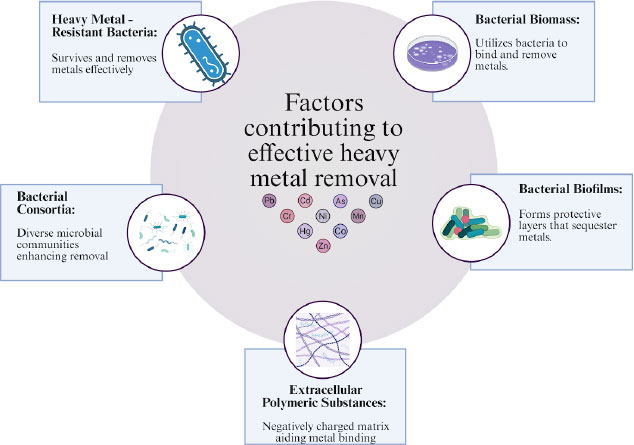
The combination of cell-wall functional groups, biofilm/EPS matrices, community-level synergies, and adaptations in metal-resistant strains enables efficient bacterial removal of heavy metals.
3.1.1.1. Bacterial Biomass in Heavy Metal Removal
Biosorption, which relies on both living and non-living microbial populations, is a natural and completely non-enzymatic approach used by microbial biosorbents to efficiently eliminate metals from polluted environments through metal binding or chelation. Irrespective of the metal ion uptake mechanism, adsorption occurs through non-specific attachment of metal ions to the surface of bacterial biomass [65].
3.1.1.2. Bacterial Biofilm and EPS in Heavy Metal Removal
Bacterial biofilms consist of organized cells attached to surfaces and surrounded by a matrix of Extracellular Polymeric Substances (EPS) that they create themselves. Bacterial biofilms offer various advantages over free-living planktonic organisms [66]. These include protecting cells from harmful environmental factors such as toxic substances, pH fluctuations, dehydration, and predation. Biofilms also enable communication through the release of quorum-sensing molecules, facilitate the exchange of genetic material [horizontal gene transfer], and provide a source of nutrients from waste products [67]. Additionally, biofilms exhibit resilience in performing different metabolic functions related to the reduction of electron acceptors [68]. In addition to these factors, bacteria are known to employ EPS synthesis as a protective strategy for their survival and growth in metal-contaminated environments. The EPSs released by bacteria primarily comprise polysaccharides, proteins, and nucleic acids. The EPS matrix contains negatively charged functional groups, such as carboxyl and hydroxyl groups [69]. Therefore, the overall negative charge of bacterial EPS significantly contributes to capturing metal cations and preventing direct contact between the cells and toxic metals.
Although the literature thoroughly explores the biotechnological potential of EPS for eliminating heavy metals from contaminated environments, there is scarce data on how heavy metals affect EPS production and on the relationship between EPS production and bacterial resistance to heavy metals, particularly when exposed to different types of metals [56].
3.1.1.3. Bacterial Consortium in Heavy Metal Removal
Unlike individual organisms, microbial consortia function as ever-changing microbial communities in which all living components interact and exchange signals [70]. Microbial consortia create microenvironments that enable them to thrive across a range of conditions and perform superior bioremediation tasks.
However, the effectiveness of a single microorganism as a modification for biosorption of heavy metals in contaminated soils is limited by the complexity of soil pollution [71]. On the whole, fungi and bacteria are the two microorganisms with the most promise as biomaterials for degrading contaminants. These microbial communities differ in their capacities and methods of degrading contaminants. The primary purpose of using bacteria in bioremediation is to eliminate environmental pollutants, particularly heavy metals [72]. The biosorption process involving microalgae and bacteria has demonstrated its ability to extract valuable metals and eliminate heavy metals. The valuable metals that have been recovered have significant commercial value, significant development potential, and positive social effects [73]. Of special interest is their excellent efficacy in treating vast volumes of wastewater with low concentrations of heavy metals. The benefits of employing microalgae and bacteria consortium treatments for heavy metals include high removal rate, quick reaction time, ease of regeneration, lack of secondary pollution, and ease of use [74].
3.1.2. Heavy Metal-resistant Bacteria as Biosorbents
Certain naturally occurring bacteria in environments contaminated with metals have evolved to survive without affecting their growth or metabolism, thereby becoming resistant to metals. It is suggested that certain microorganisms resistant to heavy metals be used [52]. Through a variety of physiological, biochemical, and genetic defenses, microorganisms are able to withstand heavy metals and thrive in hazardous conditions. Important tactics include binding and sequestering metals using metallothioneins or phytochelatins, exporting metals out of cells using efflux pumps, and enzymatically changing metals into less toxic forms (e.g., lowering Cr6+ to Cr3+ or Hg2+ to Hg0). Microorganisms can also precipitate metals into insoluble compounds, actively accumulate metals in detoxified forms within cellular compartments, or adsorb metals onto their cell walls [75]. Resistance is largely developed by genetic adaptations, which are frequently transmitted by horizontal gene transfer. Changes in metal uptake pathways also reduce toxicity. By decreasing the toxicity and bioavailability of heavy metals in contaminated environments, these processes render microorganisms indispensable for bioremediation [76].
In particular, heavy metal-resistant microbes are important geoactive agents that can interact with many chemical contaminants found in the environment. Such resistant heavy-metal-microorganisms have been used as promising alternative solutions in recent years for the treatment of various pollutants through various specific and nonspecific metabolic microbial activities [77].
There have also been numerous reports of heavy metal-resistant microorganisms cleaning up radioactive waste. Bacteria from the genera Bacillus, Microbacterium, Micrococcus, and Shinella are capable of oxidizing As[III] and performing uranium bioremediation [78, 79]. Pseudomonas fluorescens and Bacillus safensis are two examples of heavy-metal-resistant bacteria used for biosorption that have been shown to have an effective chromium-reduction capacity of up to 84% and 72%, respectively [80]. The highest biosorption efficiencies for Cd and Ni were recorded by the Pseudomonas aeruginosa strain SC2 [OM508702], at 92.43 percent and 88.45 percent, respectively [52]. From non-active sanitary landfill leachate, Vibrio damsela, Pseudomonas aeruginosa, Pseudomonas stutzeri, and Pseudomonas fluorescens were isolated as heavy metal-resistant bacteria that also demonstrated a high rate of bioremediation [77]. A bacterium resistant to cadmium was identified as Pseudomonas sp. 375, which was isolated from heavy-metal-polluted soil and has a maximum biosorption capacity of 92.59 mg/g−1 [81, 82].
3.2. Fungi as Biosorbents
Fungal species include molds, yeasts, and mushrooms, as well as other eukaryotic organisms. The cell wall structure of fungi has a strong ability to bind metals. Fungi can be used in both their living and dead forms as a biosorbent material [83]. Fungi are abundant in nature, inexpensive, and harmless to the environment. They also have a large number of functional groups on their surface, which provide many sites for the binding of metal ions [84]. Chitin, cellulose, β-glucan, α-glucan, chitosans, polyuranides, glucoproteins, lipids, inorganic salts, and pigments comprise the fungal cell wall [85]. The majority of the walls' composition, more than 80%, is made up of polysaccharides [86].
Because metal biosorption occurs at the cell surface, it is dependent upon the components of the cell as well as the cell wall's spatial orientation. In fungal cell walls, several polysaccharides are important for metal coordination [87]. It was discovered that fungi from a pond used for freshwater shrimp production, including Pythium sp., Dictyuchus sterile, and Scytalidium lignicola, accumulated zinc, lead, and cadmium through adsorption on their mycelium [87, 88]. The highest metal-uptake capacity of several fungi at their ideal pH is shown in Table 3.
| Name of Fungi | Metal | The Maximum Possible Sorption Capacity mg g−1 | pH | References |
|---|---|---|---|---|
| Aspergillus niger | Pb2+, Hg2+, and Cd2+ | 23.9 mg g−1, 27.2 mg g−1 21.5 mg g−1 |
4.0–6.0 | [89] |
| Aspergillus sydoni | Cr[VI] | 1.76 mg g−1 | 2.0–6.0 | [90] |
| Aspergillus piperis | Pb[II] | 275.82 mg g−1 | 2.0-4.0 | [91] |
| Lentinula edodes | hexavalent chromium | 194.57 mg g−1 | 6.0 | [92] |
| Phanerochaete chrysosporium | Cd Pb |
0.06 mg g−1 0.4 mg g−1 |
6.0 5.0 |
[93] |
| Phlebia brevispora | Pb Cd Ni |
98% 98% 99% |
- | [94] |
| Rhizopus arrhizus | Cu | 97.32% | 7.0 | [95] |
|
dead cells of
Rhizopus arrhizus |
Hg2+ | 90.38% | - | [96] |
3.3. Algae
The ion exchange mechanism forms metal ions on the surface of algae, which algae can efficiently and inexpensively biosorb. Freshwater and marine macro- and microalgae are examples of algae biosorbents. Through surface chemical groups like carboxyl, sulfonate, amino, and sulfhydryl, algae have a high metal absorption capability for different heavy metals [59]. The majority of biosorbents were made from biomass derived from algae that belonged to the Phaeophyta, Rhodophyta, or Chlorophyta groups. Toxic metals or oxyanions were reduced or eliminated from aqueous solutions using these biosorbents [50]. New Coccomyxa algae, designated Coccomyxa C-IR3-4C, are capable of absorbing radioactive or non-radioactive metals in aquatic conditions. This novel algal biomass has the ability to grow independently in environments with limited nutrients and high levels of ionizing radiation, demonstrating its resilience and adaptability to extreme conditions [97].
Algae can collaborate effectively. The main mechanism through which microalgal-bacterial consortia eliminate metal pollutants is biosorption [98]. The presence of acidic functional groups on bacterial cell walls and the numerous anionic groups in microalgae enable microalgal-bacterial consortia to serve as efficient metal traps for various cationic heavy metals. Compared to conventional bioremediation, biosorption is more cost-effective, more efficient, and adaptable to a range of pH and temperature conditions for removing heavy metal ions. The secondary elimination method for heavy metals in bacteria and microalgae cellular organelles is bioaccumulation and precipitation, in addition to biosorption. However, this is dependent on metabolism and is highly influenced by energy supply and temperature [30].
3.4. Removal of Toxic Heavy Metals using Genetically Engineered Microbes
A genetically modified organism involves the insertion of a certain gene into the genome of another creature [80]. According to the US definition, a genetically modified organism is a microorganism, animal, or plant that has unique genes from other species added to confer specific traits for application in bioremediation [55]. Modifying the organism to endure and survive in highly polluted areas helps the modified strain survive in an environment alongside the native microbial community [99].
Genetic modification techniques are employed to engineer microorganisms capable of enduring and thriving in highly polluted areas, enabling them to coexist with native microbial communities while performing bioremediation [100]. Common methods include gene editing and genetic engineering to enhance resistance to pollutants and improve metabolic capabilities, such as CRISPR-Cas9 technology. This powerful gene-editing tool allows precise modifications in the microbial genome to introduce or enhance genes responsible for pollutant degradation or metal resistance. For example, resistance genes for heavy metals like cadmium [Cd] and lead [Pb] can be integrated to improve tolerance in polluted environments [101]. Another significant method is plasmid engineering, in which we introduce plasmids containing genes for metal resistance, like merA for mercury reduction, or pollutant-degrading enzymes, into the organism. These plasmids enhance the microbial strain’s ability to metabolize or detoxify pollutants without altering the native genome directly [102]. The third important method commonly used is transposon mutagenesis. Transposons are used to introduce specific genes into microbial genomes, enabling the development of traits such as hydrocarbon degradation or resistance to harsh environmental conditions [103]. By applying these genetic modification methods, microorganisms are better equipped to survive in toxic environments and coexist with native microbial communities while performing efficient bioremediation.
The term “recombinant DNA technology” can also be used to describe the genetic modification method [104]. Genetic changes involve altering the microbial cell to improve protein production and other metabolic functions in order to achieve a specific outcome. Genetically engineered organisms inherit specific traits from native microorganisms through the transfer of genes [105]. These genetically modified microorganisms can be efficiently used for biosorption, which involves extracting poisons and pollutants from the environment. Bacteria, fungi, and algae exhibit a greater oxidation potential for contaminants [106]. Protein engineering and metabolic engineering have been pioneering the way in biosorption. Additionally, full transcriptome profiling and proteomics are widely utilized in biosorption [107]. A list of Genetically Engineered Microorganisms (GEMs) used to absorb heavy metals can be found in Table 4.
| A Genetically Engineered Microorganism | Heavy Metals | Removal Efficiency/The Maximum Possible Sorption Capacity | Express Genes | Reference |
|---|---|---|---|---|
| Pseudomonas aeruginosa | Cd[II] | 131.9 μmol/g | CadR protein | [107] |
| Cupriavidus metallidurans MSR33 | Hg | - | MerB and MerG | [108] |
| Escherichia coli strain, JM109 | Hg2+ | 20 µM | MerT and MerP | [109] |
| Escherichia coli SE5000 | Ni2+ | 7.14 mg/g | NixA | [110] |
| Escherichia coli | Pb[II] Cd[II] |
28.14 mg/g 24.27 mg/g |
Thio-MT | [111] |
| Escherichia coli | Zn2+ Cr3+ |
22.3 mmol/g 0.98 mmol/g |
MerP | [112] |
| Escherichia coli | As[III] | 2.2 nmol/mg | ArsR | [113] |
| Escherichia coli BL21 [DE3] | Pb2+ Zn2+ |
- | C.gMT | [114] |
| Saccharomyces cerevisiae | Cd | 84% | PtMT2b | [115] |
CONCLUSION
The ubiquitous and continuous presence of heavy metals can pose major dangers to both the environment and human health. This article simply examines the origins of the accumulation of heavy metals, their harmful effects on living organisms, and their integrated effects on antibiotic-resistant bacteria. Moreover, this article examines in greater detail potential methods of biosorption, which involve using bacteria, fungi, and algae to effectively remove and reuse heavy metals from polluted ecosystems. In addition, this research investigates the possibility of genetically engineered microbes to improve bioremediation processes. This study highlights the essential requirements for sustainable methods to find heavy metal pollution and protect human health. Hence, ecological balance can be achieved by examining the complex relationships between heavy metals and microbial communities, and bioremediation technology can be used for this aim.
AUTHORS’ CONTRIBUTIONS
The authors confirm contribution to the paper as follows: A.H.Z.: Conceptualized the study, performed the literature review, and wrote the initial draft; K.K.: Contributed to data interpretation, critical revision, and manuscript editing; A.M.: Assisted with methodology development, scientific validation, and final manuscript revision. All authors read and approved the final manuscript.
LIST OF ABBREVIATIONS
| As | = Arsenic |
| As[III] | = Trivalent Arsenic |
| Ba | = Barium |
| Cd | = Cadmium |
| Co | = Cobalt |
| Cr | = Chromium |
| Cr3+ | = Trivalent Chromium |
| Cr6+ | = Hexavalent Chromium |
| Cu | = Copper |
| DNA | = Deoxyribonucleic Acid |
| EPS | = Extracellular Polymeric Substances |
| Fe | = Iron |
| GEMs | = Genetically Engineered Microorganisms |
| HGT | = Horizontal Gene Transfer |
| Hg | = Mercury |
| Hg2+ | = Divalent Mercury Ion |
| Mg | = Magnesium |
| Mn | = Manganese |
| MT | = Metallothionein |
| Ni | = Nickel |
| Pb | = Lead |
| UV | = Ultraviolet |
| V | = Vanadium |
| Zn | = Zinc |
ACKNOWLEDGEMENTS
Declared none.